



Key Takeaways
- Neither is universally better: Body recomposition and bulking both work — the right choice depends on your training experience, current body composition, and goals.
- Recomposition works best for beginners and higher body fat: If you're new to lifting or carry 15–20%+ body fat, you can build muscle and lose fat at the same time.
- Bulking accelerates muscle growth but adds fat: A controlled 250–500 calorie surplus maximizes muscle protein synthesis, but a cutting phase is required afterward.
- Protein is non-negotiable for both: Aim for 0.7–1g of protein per pound of bodyweight regardless of which approach you follow.
- The scale lies during recomposition: Track body measurements, progress photos, and body fat percentage — not just weight.
- A hybrid approach exists: A modest 100–200 calorie surplus blurs the line between a clean bulk and recomposition, and suits many intermediate lifters well.

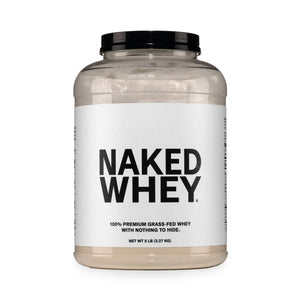
Grass Fed Whey Protein Powder | Naked Whey - 5LB
- Build and Maintain Lean Muscle Mass
- Boost Immune System
- Lose Fat
- Improve Heart Health
Is Body Recomposition Better Than Bulking? The Honest Answer

You want to look lean and muscular. The question is whether you should eat in a surplus, pack on size, and deal with the extra fat later — or try to lose fat and build muscle at the same time. Both camps have loud advocates online, and both camps are right, depending on who's doing the talking.
The honest answer is that neither approach is universally better. Body recomposition and bulking are tools. Which one fits you depends on where you're starting: your training experience, your current body fat percentage, your timeline, and what you're actually willing to do consistently for months at a time.
This article breaks down exactly how each strategy works, who benefits most from each, and how to choose with a clear framework rather than guesswork. By the end, you'll know which approach matches your situation — and what to do about it today.
The most common mistake people make is copying an advanced bodybuilder's approach when they're three months into lifting. Intermediate and advanced lifters operate under completely different physiological constraints than beginners. Context determines strategy.
What Is Body Recomposition (And How Does It Actually Work)?

Body recomposition means simultaneously losing fat and gaining muscle — improving your body composition without dramatic shifts in total bodyweight. On paper, it sounds contradictory. Fat loss requires a caloric deficit; muscle growth typically benefits from a surplus. The reason recomposition works for certain people is that these two processes don't always require opposing conditions.
The physiology hinges on a few factors. People with higher body fat percentages can use stored fat as a fuel source to support muscle protein synthesis, effectively running both processes in parallel. Beginners experience rapid neuromuscular adaptations and elevated anabolic sensitivity that make muscle gain possible even in a mild deficit. And people returning to training after a break can recover lost muscle quickly through a process tied to muscle memory — something research has consistently documented.
📊 What Research Says
A study published in the American Journal of Clinical Nutrition by Barakat et al. (2020) confirmed that simultaneous fat loss and muscle gain is achievable, particularly in untrained individuals and those in a slight energy deficit with high protein intakes — dispelling the long-held idea that recomposition is physiologically impossible.
The practical setup for recomposition: eat at or near maintenance calories (sometimes a modest deficit of 200–300 calories), keep protein high at 0.7–1g per pound of bodyweight, and train consistently with progressive overload resistance work. Cardio supports fat loss but shouldn't replace lifting as the primary stimulus.
One common misconception is that recomposition only works for beginners. While beginners have the largest advantage, trained individuals can still achieve meaningful recomposition during a return from injury, when changing training modalities, or when optimizing sleep and recovery that was previously neglected. It's harder and slower for advanced lifters — but not impossible.
What Is Bulking (And What Does a Smart Bulk Actually Look Like)?

Bulking is a deliberate caloric surplus strategy aimed at maximizing muscle protein synthesis. You eat more than you burn, train hard with heavy progressive overload, and create the anabolic environment your muscles need to grow at the fastest rate your genetics allow. The follow-up cutting phase then strips the accumulated fat to reveal the muscle underneath.
There are two versions of this, and they're not equivalent. Dirty bulking means eating whatever it takes to hit a large surplus, often 500–1,000+ calories above maintenance. You gain muscle faster in the short term, but you also accumulate significant fat, stress your metabolic markers, and face a longer, harder cut. Clean bulking keeps the surplus controlled at 250–500 calories above maintenance, prioritizes protein and whole food sources, and minimizes unnecessary fat gain while still providing enough energy for consistent muscle growth.
- Caloric surplus of 250–500 calories above total daily energy expenditure
- Protein intake of 0.8–1g per pound of bodyweight to support muscle protein synthesis
- Progressive overload resistance training: add weight, reps, or sets over time
- Whole food carbohydrate sources to fuel training and replenish glycogen
- A defined cutting phase planned in advance to remove accumulated fat after the bulk ends
The bulk/cut cycle is popular among intermediate to advanced lifters because, at a certain point, muscle growth slows dramatically without a surplus. Your body simply won't build meaningful new muscle tissue on maintenance calories when you've been lifting for years. The surplus provides the raw material. Progressive overload provides the stimulus. The combination drives adaptation that recomposition alone cannot match for experienced athletes.
Typical bulk phases run 3–6 months, followed by a cut of similar length. The goal at the end of the cut isn't just to return to your starting point — it's to carry more muscle into each new cycle.
Body Recomposition vs. Bulking: Side-by-Side Comparison

Choosing between these two strategies is easier when you can see the practical differences clearly. Here's how the two approaches compare across the metrics that actually matter:
| Factor | Body Recomposition | Bulking |
|---|---|---|
| Caloric Strategy | Maintenance or mild deficit (–200 to –300 cal) | Controlled surplus (+250–500 cal) |
| Rate of Muscle Gain | Slow | Faster |
| Fat Gain Risk | Minimal to none | Moderate (clean bulk) to high (dirty bulk) |
| Ideal Candidate | Beginners, higher body fat (15–20%+), returners | Intermediate/advanced lifters, lower body fat |
| Timeline for Results | 3–6+ months for visible change | 3–6 months bulk + 3–6 months cut |
| Complexity | High — requires precise nutrition tracking | Moderate — tracking surplus, then deficit |
| Sustainability | High — no dramatic phase shifts | Lower — requires discipline through two distinct phases |
One critical point about tracking during recomposition: the scale is a poor progress metric. Your weight may stay flat for weeks while your body fat drops and muscle increases. The number on the scale reflects water, food volume, and glycogen — not body composition changes. Track waist measurements, progress photos every 2–4 weeks, and body fat percentage via skinfold calipers or DEXA scan for an accurate picture of what's actually changing.
Bulking makes scale tracking more relevant because you expect weight to increase, but even then, monitoring the rate of gain (aim for 0.25–0.5 lbs per week during a clean bulk) helps distinguish muscle growth from excess fat accumulation.
Pros and Cons of Each Approach

Both strategies have legitimate advantages. Here's what the evidence actually supports, without overselling either side.
Body Recomposition
- No dramatic weight fluctuations: You avoid the psychological and physical stress of gaining 15–20 lbs during a bulk, then spending months cutting it off.
- Sustainable long-term: Eating at or near maintenance is easier to maintain consistently than extreme surplus or deficit phases.
- Improved metabolic health: Losing fat while building muscle simultaneously improves insulin sensitivity, lipid profiles, and cardiovascular markers.
- Fits a busy lifestyle: No rigid phase transitions. Your diet stays relatively stable, which reduces cognitive load around food planning.
- Slower visible progress: This is the real trade-off. You may go months without obvious changes in the mirror, which makes consistency harder to sustain psychologically.
- Requires precise nutrition: Protein targets, caloric balance, and training stimulus all need to be dialed in. Winging it doesn't work here.
- Plateaus faster for advanced lifters: Once you've been training for 2–3+ years, recomposition hits a wall. You can't signal meaningful new muscle growth without a surplus.
Bulking
- Faster absolute muscle gain: A caloric surplus combined with heavy resistance training is the most effective environment for maximizing muscle protein synthesis rate.
- Better training performance: More calories means more fuel. Strength sessions are more productive when you're not running close to or below maintenance.
- Clear phase structure: Having defined bulk and cut windows gives intermediate and advanced lifters concrete goals and measurable milestones.
- Unavoidable fat gain: Even a clean bulk adds some fat. Dirty bulking adds considerably more and creates a harder, longer cut afterward.
- Cutting is demanding: A poorly executed cut can cost you muscle, tank your energy, and take longer than expected. The discipline required is real.
- Metabolic risk with excessive surplus: Research from Hall et al. (2012) in Advances in Nutrition confirms that large caloric surpluses disproportionately increase fat mass relative to lean tissue, which is why controlling the surplus matters.
Which Strategy Is Right for You? (Use This Framework)
Stop trying to copy what works for someone else and answer these four questions about your own situation.
1. How long have you been training consistently? If you're under 1–2 years of structured resistance training, your body is primed for recomposition. Your anabolic sensitivity is high, and you don't need a surplus to build meaningful muscle. If you're past the 2–3 year mark and your progress has stalled, a structured bulk will likely produce better results than grinding away at maintenance.
2. What is your current body fat percentage? If you're carrying 15–20% body fat or higher (men), or 25–30%+ (women), recomposition is the smarter starting point. Your body has stored energy available to fuel muscle growth without requiring dietary surplus. If you're already lean — say, 10–12% for men or 18–20% for women — there's less metabolic advantage to recomposition, and a clean bulk will serve you better.
3. What is your primary goal, and what's your timeline? Want to look lean and athletic year-round without dramatic fluctuations? Recomposition. Want to maximize muscle size over the next year and don't mind a cutting phase afterward? Bulk. Have a specific event or competition in 6 months? Plan backward from there.
4. How flexible is your lifestyle? Bulking requires hitting a caloric surplus consistently, which takes planning. Cutting requires sustained willpower in a deficit. Recomposition requires precise protein tracking but no phase transitions. None of these is effortless. Pick the one you'll actually stick to.
The hybrid approach: A modest 100–200 calorie surplus sits between clean bulking and recomposition. For intermediate lifters who want to minimize fat gain while still providing a slight muscle-building edge, this approach is worth considering. It won't maximize muscle growth as quickly as a full bulk, but it avoids the fat accumulation that comes with a larger surplus. Protein intake at 0.8–1g per pound of bodyweight remains essential either way.
How Naked Nutrition Supplements Support Both Approaches
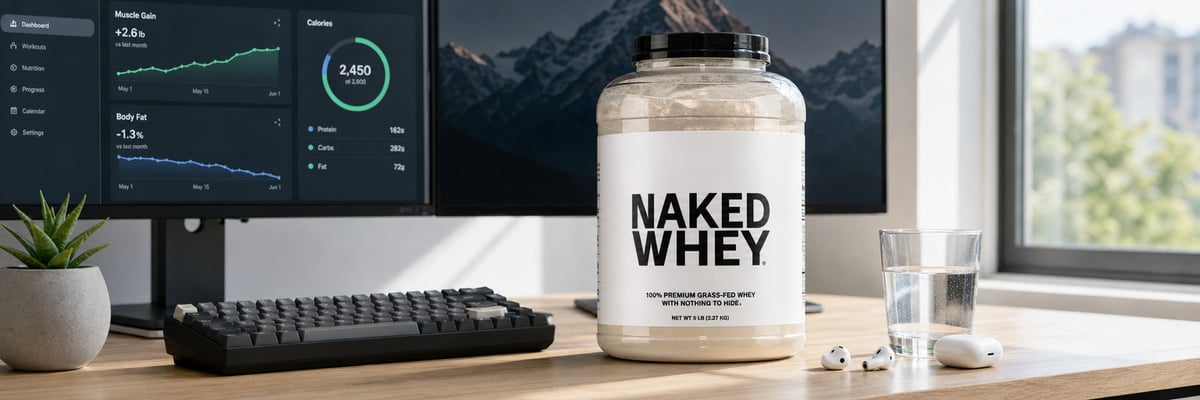
Regardless of which strategy you choose, protein intake is the variable that matters most. Getting 0.7–1g of protein per pound of bodyweight from whole food alone is achievable — but it's easier and more consistent with a quality protein powder. Naked Whey delivers fast-digesting protein post-workout, when muscle protein synthesis is elevated and amino acid availability matters most. Naked Casein provides slow-releasing protein ideal for overnight recovery, helping prevent muscle breakdown during the extended overnight fast.
For those in a bulking phase who struggle to hit caloric targets from whole food, Naked Mass is a high-calorie weight gainer built to close that gap. It provides a significant caloric contribution alongside protein, making it practical for hardgainers or anyone with a high total daily energy expenditure who needs to eat more than their appetite allows.
- Creatine monohydrate increases phosphocreatine availability in muscle cells, supporting higher training intensity and volume
- Higher training output means a stronger growth stimulus — whether you're in a surplus or at maintenance
- Research consistently shows creatine supplementation increases lean mass retention during caloric restriction, directly benefiting recomposition phases
- A standard dose of 3–5g daily is effective with no loading phase required
Naked Nutrition's formulation philosophy aligns directly with clean bulking and recomposition goals. Every product is built without artificial sweeteners, flavors, colors, or proprietary blends that obscure what you're actually consuming. When you're tracking macros precisely — which both strategies require — knowing exactly what's in your supplement isn't a nice-to-have. It's necessary. One gram of protein per serving should mean one gram of protein, not a padded label full of fillers. Naked Nutrition's products are third-party tested and built to that standard.
Whichever approach you follow, the supplement stack is the same at its core: a high-quality protein powder, creatine monohydrate, and whole food the rest of the time. From there, you add calories for a bulk or hold steady for recomposition. The fundamentals don't change.
Frequently Asked Questions
Is body recomposition actually possible, or is it just a myth?
Body recomposition is real, but it's not equally accessible to everyone. Research published in the Journal of Strength and Conditioning Research (Barakat et al., 2020) confirmed simultaneous muscle gain and fat loss in resistance-trained individuals eating at or near maintenance calories. Your results depend heavily on your training status, protein intake, and how consistently you execute both.
Who gets the best results from body recomposition versus bulking?
Beginners, people returning after a training break, and those with higher body fat percentages respond best to recomposition because their bodies are primed to gain muscle and lose fat simultaneously. Experienced lifters who are already lean tend to hit a wall with recomposition and will build muscle faster in a structured caloric surplus. Know where you are before choosing your approach.
How much protein do you need for body recomposition?
Most evidence points to 0.7 to 1.0 grams of protein per pound of bodyweight per day as the effective range for recomposition. A 2018 meta-analysis by Morton et al. in the British Journal of Sports Medicine found that protein intakes above 0.82 grams per pound produced no additional muscle gain in most individuals. Hit your target consistently every day, not just on training days.
Will a dirty bulk help you build muscle faster than a clean bulk or recomposition?
A dirty bulk does put you in a larger caloric surplus, but research shows muscle protein synthesis doesn't scale linearly with calories. Churchward-Venne et al. (2012) in the American Journal of Clinical Nutrition found that excess calories beyond what muscle tissue can use are stored as fat, not converted to additional muscle. A modest surplus of 200 to 300 calories above maintenance builds muscle without the fat accumulation a dirty bulk guarantees.
How long does body recomposition take to show visible results?
Most people need 8 to 16 weeks of consistent training and dialing in nutrition before visible recomposition changes appear. The scale often won't move much since you're simultaneously gaining muscle and losing fat, so progress photos and body measurements are more useful tracking tools than bodyweight alone. Patience isn't optional here.
Can women do body recomposition as effectively as men?
Yes, and in some respects women are well suited to recomposition because they tend to oxidize more fat during exercise relative to men, as noted by Tarnopolsky et al. (1997) in the Journal of Applied Physiology. Women do build muscle more slowly due to lower testosterone levels, so timelines are longer, but the process itself works the same way. Adequate protein and progressive overload are the two non-negotiables regardless of sex.
Does bulking ruin your physique by adding too much fat?
A poorly managed bulk does exactly that. Gains made in a large caloric surplus beyond 500 calories per day over maintenance consistently produce more fat than muscle in natural, trained lifters. A controlled surplus kept between 200 and 300 calories minimizes fat accumulation while still supporting muscle growth, and cuts down the time you'd otherwise spend dieting it back off.
Do you need supplements to support body recomposition or bulking?
No supplement is required, but a few have solid evidence behind them. Creatine monohydrate consistently increases strength output and lean mass across dozens of trials, including a meta-analysis by Lanhers et al. (2017) in the European Journal of Sport Science. A high-quality protein powder like whey or a plant-based blend is useful if you're struggling to hit your daily protein target from whole foods alone, but food always comes first.
Top General Nutrition Picks
Chosen by 1 million+ customers. Free shipping on orders over $100.

Vegan Mass Gainer Protein Powder | Naked Vegan Mass - 8LB
$79.99
- ✓ Fuel Your Workouts
- ✓ Meet Daily Calorie Requirements to Gain Weight
- ✓ Plant-Based Proteins to Build Muscle

Creatine Monohydrate Powder | Naked Creatine - 2.2LB
$35.99
- ✓ 100% premium creatine monohydrate
- ✓ Highest grade available: fast dissolving and quickly absorbed
- ✓ 5g of creatine per serving
- ✓ No artificial sweeteners, flavors, or colors

Grass Fed Whey Isolate Protein Powder | Naked Whey Isolate - 2LB
$74.99
- ✓ Whey Protein Base
- ✓ Protein Isolate
- ✓ Grass-Fed Source