




Key Takeaways
- Same core benefits: Organic and conventional whey protein deliver identical muscle-building, cardiovascular, and metabolic benefits through the same biological mechanisms.
- No head-to-head evidence: No clinical trials directly compare health outcomes between organic and conventional whey protein. Current evidence does not show a meaningful difference.
- Processing matters: Filtration, pasteurization, and drying reduce many source-dependent variables, so differences in raw organic milk do not reliably transfer to the final powder.
- Price premium is real: Organic whey typically costs 30–50% more. That difference reflects farming practices and certification costs, not documented health advantages.
- Better quality signals exist: Third-party testing, minimal ingredients, and grass-fed sourcing are more practically meaningful quality indicators than the organic label alone.
- Valid reasons to choose organic: Environmental sustainability, animal welfare, and avoiding synthetic hormone residues are legitimate personal values, even if they don't translate to measurable health gains.

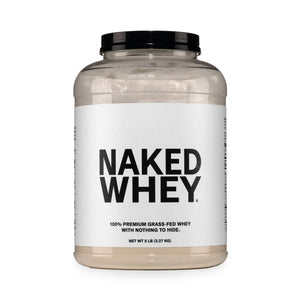
Grass Fed Whey Protein Powder | Naked Whey - 5LB
- Build and Maintain Lean Muscle Mass
- Boost Immune System
- Lose Fat
- Improve Heart Health
Is Organic Whey Protein Actually Healthier? What the Research Shows

You're standing in a supplement aisle, holding two tubs of whey protein. One is certified organic and costs $65. The other isn't, and it costs $42. The question is simple: does that extra $23 buy you better health results?
The short answer is no, at least not based on current research. Organic and conventional whey protein deliver the same core health benefits: equivalent muscle protein synthesis, the same amino acid profile, and identical bioactive compounds. The science has not produced a single clinical trial showing that organic-certified whey outperforms conventional whey on any health outcome that matters to athletes or everyday protein users.
That doesn't make organic whey a bad choice. It makes it a different kind of choice, one grounded in values around farming practices and environmental impact rather than a proven physiological edge.
This article covers exactly why the two are nutritionally equivalent at the molecular level, what whey processing does to source-dependent differences, which health benefits are well-established regardless of certification status, and how to identify genuinely high-quality whey protein without paying for a label that may not deliver what you expect.
Disclaimer: This article is for informational purposes only and does not constitute medical or nutritional advice. Always consult a qualified healthcare provider or registered dietitian before making changes to your supplement or protein intake.
How Whey Protein Is Made (And Why the Source Matters)

All whey protein starts as a byproduct of cheese manufacturing. When enzymes or acids are added to milk, it separates into two components: solid curds that become cheese, and liquid whey. That liquid whey is then filtered, concentrated, and spray-dried into the powder you scoop into a shaker.
Because the starting material is cow's milk, the health, diet, and treatment of dairy cows can influence certain properties of the raw milk, which is why organic proponents argue that the source matters. And they're partially right: the source does influence raw milk composition. The question is how much of that difference survives industrial whey processing.
Whey protein comes in three main forms, and processing intensity increases across each type:
- Concentrate: 70–80% protein by weight, retains more fat, lactose, and naturally occurring bioactive compounds.
- Isolate: 90%+ protein by weight, most fat and lactose removed through additional filtration, making it suitable for lactose-sensitive individuals.
- Hydrolysate: Pre-digested through enzymatic hydrolysis for faster absorption, often used in medical nutrition products.
Each additional processing step removes more of the source-dependent variables, including the small fatty acid differences that might distinguish organic from conventional milk. By the time raw liquid whey becomes a protein isolate, most of the compositional differences tied to farming practices have been filtered out. This is the fundamental reason why the organic vs. conventional debate matters less for whey than it does for whole milk or butter.
Organic vs. Conventional Dairy Farming: What's Actually Different

The differences between organic and conventional dairy operations are real and meaningful at the farm level, even if they don't always persist through to the supplement shelf.
Conventional dairy farming typically houses cows in controlled feeding environments where grain-based diets are standard. Those feeds may include crops grown with synthetic pesticides, fertilizers, and GMO varieties. Farmers can legally administer recombinant bovine somatotropin (rBST) to boost milk production and use preventive antibiotics to manage disease risk in higher-density housing.
Certified organic dairy farming prohibits synthetic hormones, preventive antibiotics, and GMO feeds. Organic standards require a minimum of 120 days of annual pasture access, with cows grazing on land free from synthetic pesticides and fertilizers.
A meta-analysis by Benbrook et al. found that organic dairy products contain higher concentrations of alpha-linolenic acid (ALA) and total omega-3 fatty acids compared to conventional products, likely driven by greater pasture access and grass consumption. The finding is worth noting, though the research is now over a decade old and may not reflect current conventional farming improvements in many regions.
Two additional labels create consumer confusion worth addressing. Grass-fed is not the same as certified organic. Grass-fed cattle eat a pasture-based diet, which produces milk with a better omega-3 to omega-6 ratio, but grass-fed farms can still use hormones or pesticides unless they carry additional certifications. rBST-free labeling means no synthetic growth hormone was used, which is one of the most commonly cited consumer concerns, and many conventional brands now carry this label without full organic certification. These middle-ground options are worth knowing when you're trying to match your values to your budget.
What Research Says About Organic vs. Conventional Whey Protein Specifically
Here's the direct answer: no head-to-head clinical trials comparing health outcomes between organic and conventional whey protein exist. The absence of this research isn't an oversight. It reflects a practical reality about how whey processing works.
Filtration, pasteurization, and spray-drying reduce or eliminate most source-dependent variables. The essential amino acid profile, biological value (approximately 104, the highest of any protein source), and primary bioactive compounds remain consistent in both organic and conventional whey. Szydłowska et al. (2020) evaluated products made with organic whey protein concentrate and confirmed their nutritional value and antioxidant activity, but those properties were attributed to whey protein's inherent composition, not to its organic origin.
The omega-3 question is a reasonable one to raise. Organic milk does contain more ALA than conventional milk. However, whey protein contains very little fat to begin with, and isolate forms contain even less. The small fatty acid differences present in organic raw milk do not transfer meaningfully to an isolated whey powder.
📊 What Research Says
No study has demonstrated a measurable health outcome difference between organic and conventional whey protein in human subjects. The position is not "organic is definitely no better" — it's that current evidence does not show a difference, and the processing science explains why one is unlikely to emerge.
| Health Outcome | Evidence Quality | Mechanism | Applies to Both Types |
|---|---|---|---|
| Muscle protein synthesis | Strong | Leucine-triggered mTOR pathway | Yes |
| LDL cholesterol reduction | Strong | Bioactive peptide activity | Yes |
| Sarcopenia prevention | Strong | Enhanced amino acid utilization | Yes |
| Immune support | Moderate | Lactoferrin and immunoglobulins | Yes |
| Organic superiority claims | No evidence | No comparative research exists | Not demonstrated |
The Real Health Benefits of Whey Protein (Regardless of Organic Status)

The documented case for whey protein is strong. It doesn't depend on organic certification. These are the benefits that research consistently supports for both types.
- Triggers muscle protein synthesis via the leucine-mTOR pathway, with 2.5–3g of leucine per 25g serving
- Reduces LDL cholesterol by 12–15% and triglycerides by 8–12% through bioactive peptide activity
- Preserves lean muscle mass in older adults by enhancing amino acid availability during aging
- Supports immune function through lactoferrin and immunoglobulins present in whey concentrate
- Increases satiety and supports appetite regulation, relevant for weight management goals
Muscle protein synthesis: Whey protein contains all essential amino acids in optimal ratios. The high leucine content (2.5–3g per 25g serving) directly activates the mTOR pathway responsible for muscle repair and growth. For most adults, 20–25g consumed within two hours post-exercise maximizes the anabolic response. For a 150-pound person, that's approximately 0.25–0.30g per pound of body weight per serving.
Cardiovascular health: Prokopidis et al. (2024) published a systematic review and meta-analysis in Clinical Nutrition demonstrating that whey protein supplementation reduces LDL cholesterol by 12–15% and triglycerides by 8–12%, particularly when paired with regular exercise. Studies showing these effects used 25–50g daily, typically in one to two servings with meals or post-workout.
Sarcopenia prevention: Camargo et al. (2020) found that whey protein supplementation in elderly populations supports lean muscle maintenance and improves recovery from illness. Research in this area typically used 25–30g daily, often between meals to maximize amino acid availability. This benefit is particularly relevant for adults over 65 who may struggle to meet protein needs through whole foods alone.
Immune support and satiety: Whey concentrate retains lactoferrin and immunoglobulins, bioactive compounds with documented immune-modulating properties. Whey protein also increases satiety hormones like GLP-1 and PYY, making it a practical tool for appetite regulation and calorie management. These effects are consistent across both organic and conventional sources, as confirmed by Zhao et al. (2021) in their review of whey bioactive peptides.
What to Look for in a High-Quality Whey Protein (Beyond the Organic Label)
Organic certification is not the most important quality indicator when choosing whey protein. Several other markers are more directly linked to what ends up in your body.
Third-party testing is the single most important factor most buyers overlook. Labels like Informed Sport and NSF Certified for Sport confirm that the product has been independently tested for heavy metals, contaminants, and label accuracy. No amount of organic certification replaces this.
Ingredient list transparency matters. A clean whey protein should contain whey protein, minimal flavoring if any, and nothing else. Artificial sweeteners, fillers, proprietary blends, and undisclosed additives are red flags regardless of organic status.
Grass-fed vs. organic is a distinction worth understanding before you buy. Grass-fed whey comes from cows primarily raised on pasture, producing milk with a more favorable omega-3 to omega-6 ratio and naturally higher CLA content. Grass-fed certification does not require the same regulatory paperwork as USDA Organic, which keeps costs lower while still delivering many of the nutritional advantages associated with pasture-based farming. For many buyers, grass-fed is the practical middle ground between conventional and certified organic.
Isolate vs. concentrate is the more medically relevant processing distinction. If you're lactose-sensitive, whey isolate contains less than 1% lactose and is a cleaner option for digestive comfort, regardless of whether it's organic or conventional.
Naked Nutrition's whey protein is sourced from small California dairy farms, uses minimal ingredients, and undergoes third-party testing. That kind of sourcing transparency and testing accountability is what genuinely differentiates a quality product, not a certification that tells you more about how the cows were raised than what's in the finished powder.
Budget allocation: If you're spending 30–50% more on organic whey, that's real money. Redirecting that budget toward higher-quality whole foods, additional vegetables, or a creatine supplement with well-established ergogenic benefits will likely produce more measurable health improvements than the certification upgrade alone.
Who Should Consider Organic Whey Protein?
Choosing organic whey is a reasonable decision. It just needs to be made for the right reasons.
If avoiding synthetic pesticide residues or rBST is a personal priority, organic certification provides meaningful assurance. The same is true if animal welfare and environmental sustainability factor into your purchasing decisions. These are legitimate values, and aligning your supplement spending with them is a rational choice, as long as you're not expecting a physiological advantage that the evidence doesn't support.
If your primary concern is hormone exposure specifically, it's worth knowing that rBST-free and hormone-free labels are now common on conventional whey products. These labels address the most frequently cited concern about conventional dairy without the full price premium of organic certification.
Who benefits most from any whey protein, organic or conventional:
- Active adults engaged in resistance or endurance training who want to maximize post-workout recovery and muscle protein synthesis
- Adults over 65 who may not consistently meet protein needs through whole foods and need easily absorbed amino acids to protect lean muscle mass
- Busy professionals who need a convenient, shelf-stable, high-quality protein source without meal preparation
- Individuals managing weight who benefit from whey's documented appetite regulation and satiety effects
Digestive and medical considerations: Both organic and conventional whey can cause discomfort in lactose-sensitive individuals. In that case, the concentrate vs. isolate distinction matters far more than the organic label. If you have kidney disease, liver conditions, or take medications affecting protein metabolism, work with a registered dietitian to determine appropriate intake levels before supplementing with any whey product. These are individual clinical decisions that go beyond certification status.
Frequently Asked Questions
Is organic whey protein actually healthier than conventional whey protein?
It depends on what you mean by "healthier." Organic whey protein comes from cows raised without synthetic hormones, pesticides, or antibiotics, which reduces your exposure to those residues. The amino acid profile and protein content are essentially the same between organic and conventional whey, so if your primary goal is muscle building, both perform similarly.
Does organic whey protein have more nutrients than conventional whey?
Research suggests that milk from grass-fed, organically raised cows contains higher levels of omega-3 fatty acids and conjugated linoleic acid (CLA) compared to milk from conventionally raised cows. A 2016 study published in the British Journal of Nutrition found organic dairy had roughly 50 percent more omega-3s than conventional dairy. These differences are modest and won't dramatically shift your overall nutrition profile, but they're real.
What does the USDA Organic certification actually guarantee?
USDA Organic certification means the cows were raised on certified organic pasture, fed 100 percent organic feed, and were not treated with synthetic hormones like rBGH or routine antibiotics. It does not guarantee grass-fed status year-round, and it doesn't require third-party testing for heavy metals or contaminants. If those things matter to you, look for additional certifications like Certified Grass-Fed or NSF Certified for Sport.
Is organic whey protein safe for daily use?
Yes, for most healthy adults, organic whey protein is safe consumed daily within reasonable amounts, typically 20 to 40 grams per serving. People with dairy allergies or lactose intolerance should avoid it regardless of organic status, since the dairy proteins and residual lactose are still present. If you have kidney disease or specific health conditions, consult a registered dietitian before adding any high-protein supplement to your routine.
Why is organic whey protein more expensive than conventional whey?
Organic certification requires farms to meet strict USDA standards, which increases feed costs, land management requirements, and third-party inspection fees. These costs pass directly to the consumer, often making organic whey 30 to 60 percent more expensive per pound than conventional options. You're paying for verified sourcing standards, not necessarily a dramatically different protein powder.
Does organic whey protein build muscle as effectively as conventional whey?
Yes. Muscle protein synthesis is driven primarily by leucine content and total essential amino acid intake, and organic whey delivers both at the same levels as conventional whey. A serving of organic whey concentrate typically provides 8 to 10 grams of essential amino acids and around 2.5 grams of leucine, which is enough to trigger a full anabolic response. The organic label changes the sourcing standards, not the protein's functional performance.
What should I look for on the label when buying organic whey protein?
Start with the USDA Organic seal, then check the ingredient list: it should be short, with whey protein as the first ingredient and no artificial sweeteners, fillers, or proprietary blends masking actual protein content. Cross-reference the grams of protein per serving against total serving weight to calculate the protein percentage; a quality product should be at least 70 to 80 percent protein by weight. Third-party testing certifications like Informed Sport or NSF Certified for Sport add an extra layer of quality assurance.
Is organic whey protein worth the extra cost?
It depends on your priorities. If you care about minimizing exposure to synthetic hormones and pesticide residues, and you value supporting organic farming practices, the premium is justified. If you're primarily focused on hitting your daily protein targets on a budget, a high-quality conventional whey from a reputable brand with third-party testing will serve you just as well for muscle recovery and performance.
Top Whey Protein Picks
Chosen by 1 million+ customers. Free shipping on orders over $100.

Micellar Casein Protein Powder Supplement - 5LB
$109.99
- ✓ Why Micellar Casein Protein
- ✓ Promote Muscle Growth While You Sleep
- ✓ Improve Body Composition

Pea Protein Powder | Naked Pea - 5LB
$57.99
- ✓ Sustainable Farming Practices
- ✓ Superior Amino Acid Profile
- ✓ Promote Muscle Gain
- ✓ Lose Weight

Vanilla Whey Protein Powder | Naked Vanilla Whey - 5LB
$139.99
- ✓ Build and Maintain Lean Muscle Mass
- ✓ Boost Immune System
- ✓ Lose Fat
- ✓ Improve Heart Health